嘀嗒嘀logo.png)
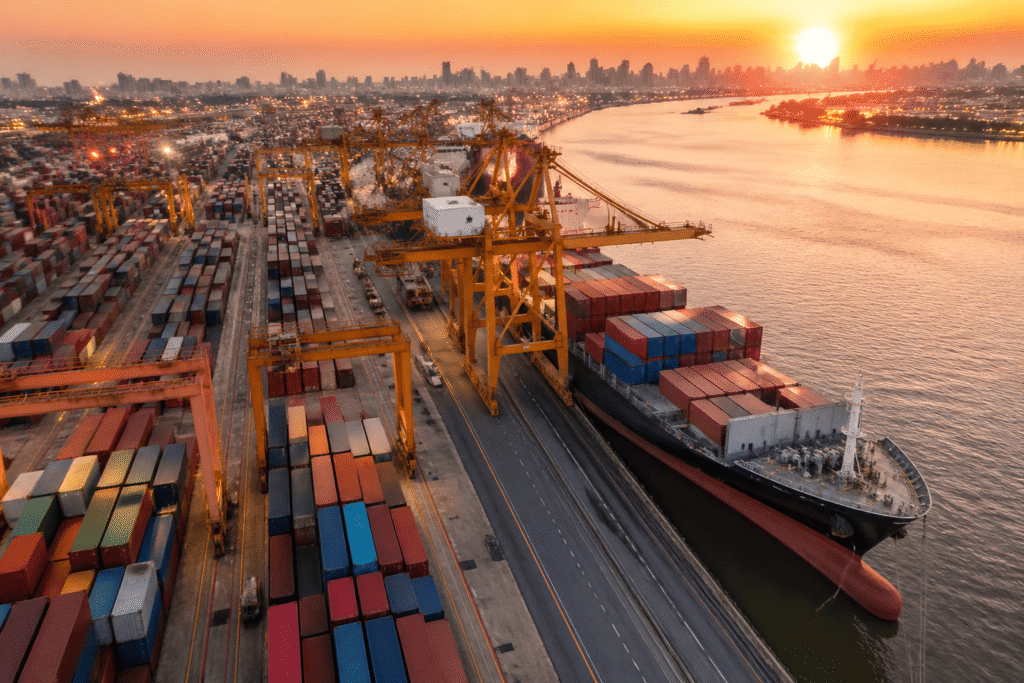
Are you confused about labeling your products "Made in China" versus "Made in PRC"? You are right to worry, as a small mistake can lead to big customs delays.
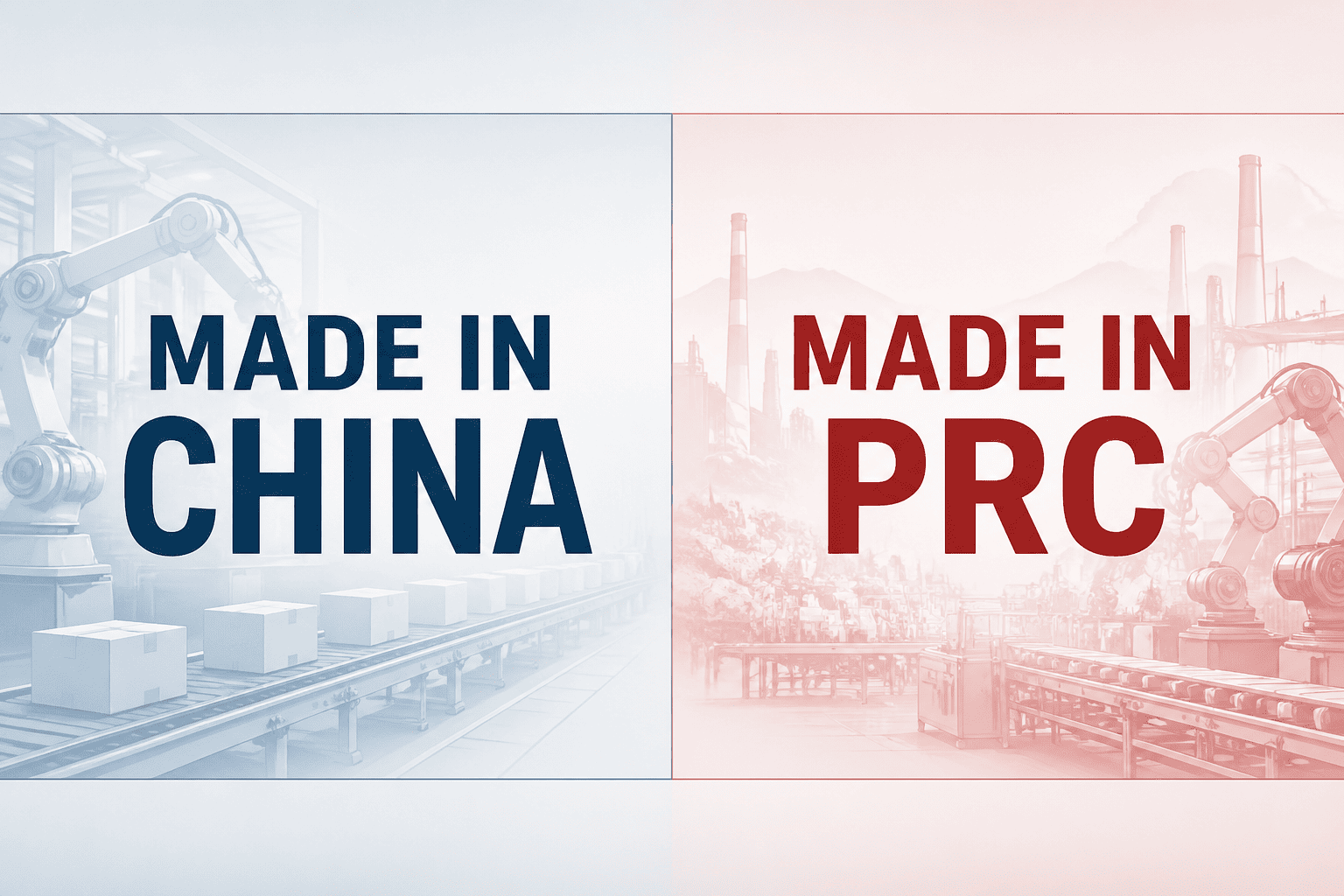
"Made in PRC" simply means "Made in the People's Republic of China."1 For import authorities in the U.S. and Europe, it is treated the same as "Made in China." The most important thing is not the exact wording, but ensuring your product label is consistent with all your shipping documents2.
As a logistics provider, I get this question all the time, especially right before a shipment is about to leave the factory. A client will email, "Can we just mark the cartons as 'Made in PRC'?" I know they aren't just asking about the three letters.
They are really asking about customs, tariffs, potential delays, and whether Amazon or their customers will accept it. It is a question loaded with concern about the complexities of international trade. Let's unpack the reality behind this label, so you can make informed decisions that protect your supply chain.
Can You Legally Mark Your Products as 'Made in PRC'?
You want to use "Made in PRC" on your packaging but are not sure if it is compliant. A wrong choice here could get your entire shipment stopped, inspected, or even rejected.
Yes, you can often use "Made in PRC," but it is not a simple substitute for "Made in China." U.S. Customs, for instance, requires the country of origin to be marked clearly in English.3 While "PRC" is sometimes accepted, "China" is the safest, most universally understood option.
The core principle behind country of origin marking is that it must be clear and unambiguous to the final purchaser. U.S. Customs and Border Protection (CBP) regulations state the marking must be legible, permanent, and in a conspicuous place. The problem with "PRC" is that it might not be considered "clear" to every customs officer or consumer.
While people in the logistics industry know what PRC means, an officer at a busy port might not. This can trigger a secondary inspection, causing delays while they verify the origin. Why take the risk? Using "China" removes all doubt. I always advise clients that the goal is to move through customs with as little friction as possible. Sticking to the most common and clear term is the best way to do that.
Here is a simple breakdown of how different parties view these labels:
| Marking | U.S./E.U. Customs View | Amazon FBA View | End Consumer View |
|---|---|---|---|
| Made in China | Safest option, universally accepted. | Fully compliant, no issues. | Clear and transparent. |
| Made in PRC | Generally acceptable, but can raise questions. | Might cause receiving issues if unclear. | Less recognized, can cause confusion. |
Does Using 'Made in PRC' Help Avoid Tariffs or Duties?
You are facing high tariffs, like the Section 301 duties on Chinese goods. It is tempting to look for any possible way to lower these costs and stay competitive.
No, marking your product "Made in PRC" instead of "Made in China" will absolutely not help you avoid tariffs, anti-dumping duties, or Section 301 duties.4 Customs duties are determined by the product's actual country of origin and its official HS code, not by the wording on the label.
This is a dangerous misconception I have to correct often. Some factories might even suggest this as a "trick" to fly under the radar. It does not work. Customs authorities determine duties based on the formal customs declaration submitted by the broker. On that declaration, the country of origin is entered using a standardized two-letter code5.
For the People's Republic of China, that code is "CN." The tariff rate is applied based on that "CN" code and the product's HS code. Changing the text on the box from "China" to "PRC" does not change the "CN" on the customs entry form.
Trying to intentionally misrepresent the origin to evade duties is considered customs fraud.6 The penalties are severe, including massive fines, seizure of your goods, and even a ban on future importing activities. I once worked with a new importer who was advised by their supplier to use "PRC" to avoid Section 301 tariffs.
We stopped that plan immediately. We explained that their legal liability as the importer of record is based on facts, and the fact was the goods were made in China. The only legal way to manage duties is through correct classification, valuation, and compliance, not through labeling tricks.
Who Decides the Rules for Country of Origin Labeling?
You are getting conflicting advice on how to label your products. Your factory says one thing, you read something else on an Amazon forum, and you are not sure who to listen to.
There is not just one single rulebook. You actually have to satisfy several different sets of requirements at the same time. First, government customs agencies set the legal import rules. Second, sales platforms like Amazon have their own policies. Finally, your customers have expectations for clarity.

To avoid problems, you have to understand and follow each layer of rules. It is like a stack of requirements, and you must comply with all of them, from the bottom up.
1. Government Customs Requirements
This is the most important layer because it is the law. For example, U.S. law requires that imported articles be marked with the English name of the country of origin. The purpose is to inform the ultimate purchaser where the product was made.
The marking must be permanent enough to survive until it reaches the end customer. Failure to comply can result in marking duties or having your goods detained until they are properly labeled7, which can be a very expensive process at the port. This is the baseline you absolutely must meet.
2. Marketplace Platform Requirements (e.g., Amazon)
Marketplaces like Amazon have their own commercial rules on top of the legal ones. Amazon's policy requires that products have a clear country of origin label to comply with regulations in the countries where it operates. If an FBA shipment arrives at a fulfillment center with unclear or missing labels, Amazon may refuse the inventory.8 This can lead to your listings being suppressed or your inventory being stranded, disrupting your sales and cash flow.
3. B2B Retailer & Distributor Requirements
If you are a wholesaler selling to other businesses or large retail chains, they often have their own specific requirements. These are usually outlined in a detailed "routing guide" or "vendor manual."
These guides may specify the exact wording, size, and placement of the country of origin marking to fit their internal inventory and warehouse systems. Not following their guide can lead to chargebacks, where the retailer charges you a penalty fee for the non-compliance.
"China - Wikipedia", https://en.wikipedia.org/wiki/China. An encyclopedia or official country profile identifies PRC as the abbreviation for the People's Republic of China, supporting the equivalence of the terms in ordinary usage. Evidence role: definition; source type: encyclopedia. Supports: “Made in PRC” means “Made in the People’s Republic of China.”. ↩
"Marking of Country of Origin on U.S. Imports", https://www.cbp.gov/trade/rulings/informed-compliance-publications/marking-country-origin-us-imports. Customs guidance on import entries and origin marking shows that declared origin and product markings are both relevant to import compliance, supporting the need for consistency between physical labels and shipment documentation. Evidence role: general_support; source type: government. Supports: Product labels should be consistent with shipping and customs documentation to reduce compliance issues.. Scope note: The source may establish documentation and marking requirements separately rather than stating a single universal consistency rule. ↩
"Marking of Country of Origin on U.S. Imports", https://www.cbp.gov/trade/rulings/informed-compliance-publications/marking-country-origin-us-imports. U.S. country-of-origin marking law and CBP regulations require imported articles to be marked legibly, conspicuously, and in English with the country of origin, supporting the statement about U.S. marking requirements. Evidence role: definition; source type: government. Supports: U.S. Customs requires imported goods to bear a clear English country-of-origin marking.. ↩
"China Section 301-Tariff Actions and Exclusion Process - USTR", https://ustr.gov/issue-areas/enforcement/section-301-investigations/tariff-actions. U.S. trade-remedy and tariff guidance applies duties based on country of origin and tariff classification rather than alternative wording on a package label, supporting the conclusion that “PRC” wording does not avoid China-origin duties. Evidence role: mechanism; source type: government. Supports: Changing a label from “Made in China” to “Made in PRC” does not avoid tariffs, antidumping duties, or Section 301 duties when the goods are China-origin.. Scope note: The source supports the legal mechanism for duty assessment, not every possible product-specific duty scenario. ↩
"ISO 3166-1 alpha-2 - Wikipedia", https://en.wikipedia.org/wiki/ISO_3166-1_alpha-2. International standards such as ISO 3166-1 define two-letter country codes, and customs systems use such codes in trade declarations, supporting the general statement about standardized country identifiers. Evidence role: definition; source type: institution. Supports: Country of origin may be represented in customs declarations by standardized two-letter country codes.. Scope note: A customs entry system may implement ISO codes through jurisdiction-specific data-element rules. ↩
"19 USC 1592: Penalties for fraud, gross negligence, and negligence", https://uscode.house.gov/view.xhtml?req=(title:19%20section:1592%20edition:prelim). U.S. customs penalty law prohibits material false statements or omissions in importation, including misstatements affecting duties, supporting the characterization of intentional origin misrepresentation as customs fraud or a customs-law violation. Evidence role: definition; source type: government. Supports: Intentional misrepresentation of origin to evade duties can constitute customs fraud or a customs-law violation.. Scope note: The exact legal label and penalties depend on facts, intent, and the enforcement authority’s findings. ↩
"19 U.S. Code § 1304 - Marking of imported articles and containers", https://www.law.cornell.edu/uscode/text/19/1304. U.S. marking law authorizes additional marking duties for improperly marked imported articles, and CBP procedures allow goods to be withheld or released only after corrective marking, supporting the stated consequences of noncompliance. Evidence role: mechanism; source type: government. Supports: Failure to comply with U.S. origin-marking requirements can result in marking duties and corrective action before release.. Scope note: Specific detention or release outcomes depend on CBP action and the facts of the shipment. ↩
"Amazon FBA Inventory Rejected? 5 Packaging & Labeling Mistakes ...", https://www.tradeaiders.com/ru/amazon-fba-inventory-rejected-5-packaging-labeling-mistakes-to-avoid.html. Amazon’s FBA shipment-preparation and labeling policies state that noncompliant or improperly labeled inventory may be refused, returned, or otherwise made unavailable, supporting the claim about fulfillment-center consequences. Evidence role: case_reference; source type: other. Supports: Amazon may refuse or otherwise block FBA inventory when required labels are missing or unclear.. Scope note: This is platform-policy evidence rather than a government compliance rule, and Amazon may change enforcement practices over time. ↩